How Floods and Rising Sea Levels Disrupt Healthcare Service Delivery: A Mixed-Methods Framework
OR68 Annual Conference, From Data to Decisions | University of Nottingham, September 2026
Amirhossein Ghadiri, PhD Student
Data Lab for Social Good, Cardiff Business School, Cardiff University
Prof. Bahman Rostami-Tabar, Lead supervisor
Data Lab for Social Good, Cardiff Business School, Cardiff University
Dr. Thomas Woolley, Co-supervisor
School of Mathematics, Cardiff University
Dr. William Bennett, Co-supervisor
School of Engineering, University of Swansea
Monmouth, November 2024
A community hospital takes on water. Staff move every patient up to the first floor and wait there. Their access is cut off until the water level drops.
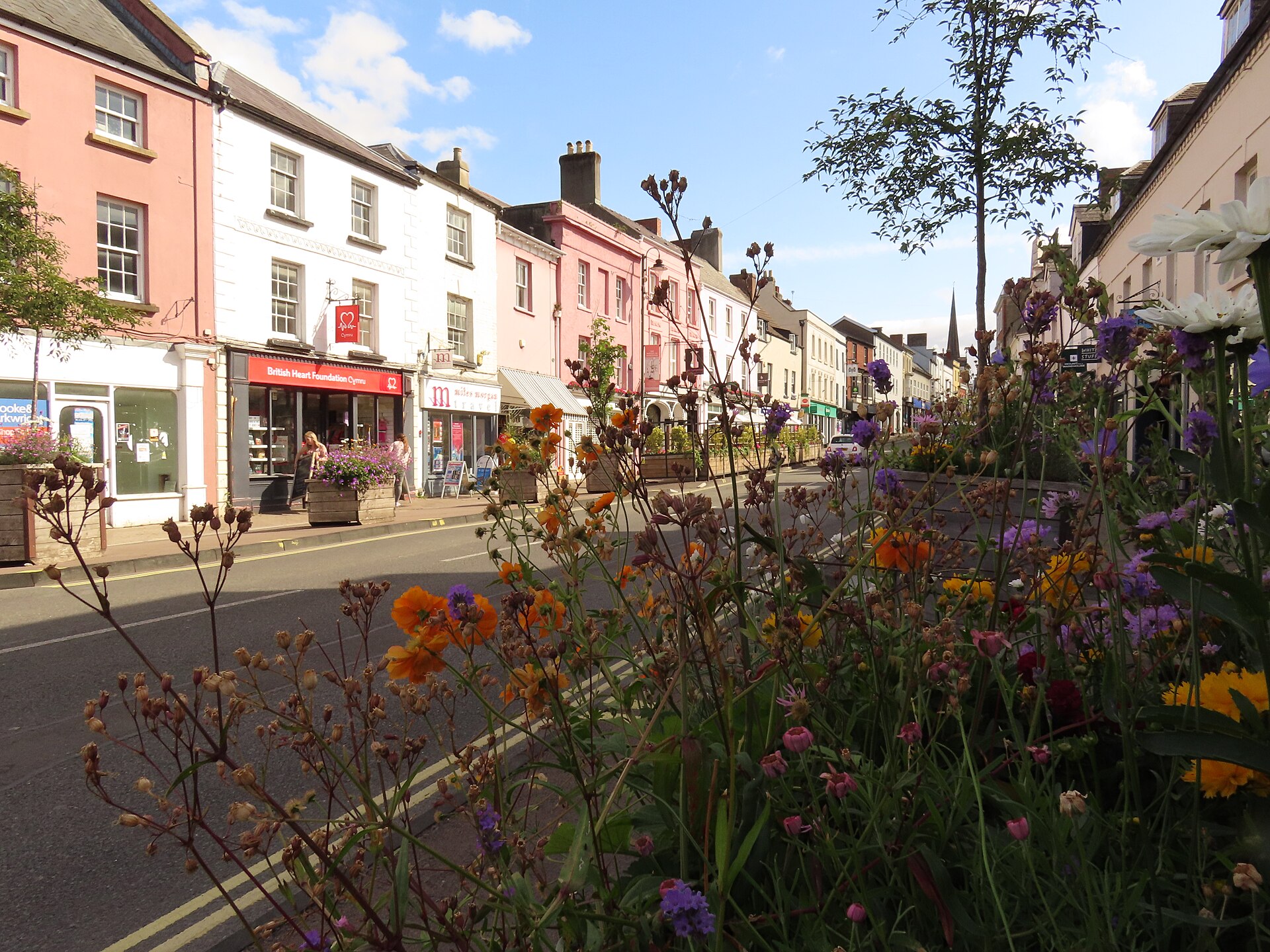
On the city’s main street, a pharmacy, a dentist, and a GP surgery all flood at once.
The water never reaches the electrical substations, but they fail anyway. Power is gone for up to 48 hours, and people on home oxygen and dialysis machines, well outside the flooded streets, are suddenly at risk.
This is what flooding disruption to healthcare actually looks like. My PhD is about understanding it, measuring it, and planning for it.
Three health services sit on this one street
Monnow Street, Monmouth.
What I will cover
The problem
Interconnected research directions
WP1: mapping how floods disrupt care
WP2 and WP3: measure it, then plan for it
Key Takeaways
The question behind everything
Floods and rising sea levels keep disrupting how healthcare is delivered in Wales. We map where the water goes, but we do not map what stops working.
Roughly one in eight properties in Wales sits at flood risk, and the climate signal points to wetter winters and higher seas 1
There is no central record of how floods disrupt healthcare delivery, who it hits, or for how long 2
How do floods disrupt healthcare service delivery, and what can we do about it?
We can see the water coming. We cannot see what services it disrupt,
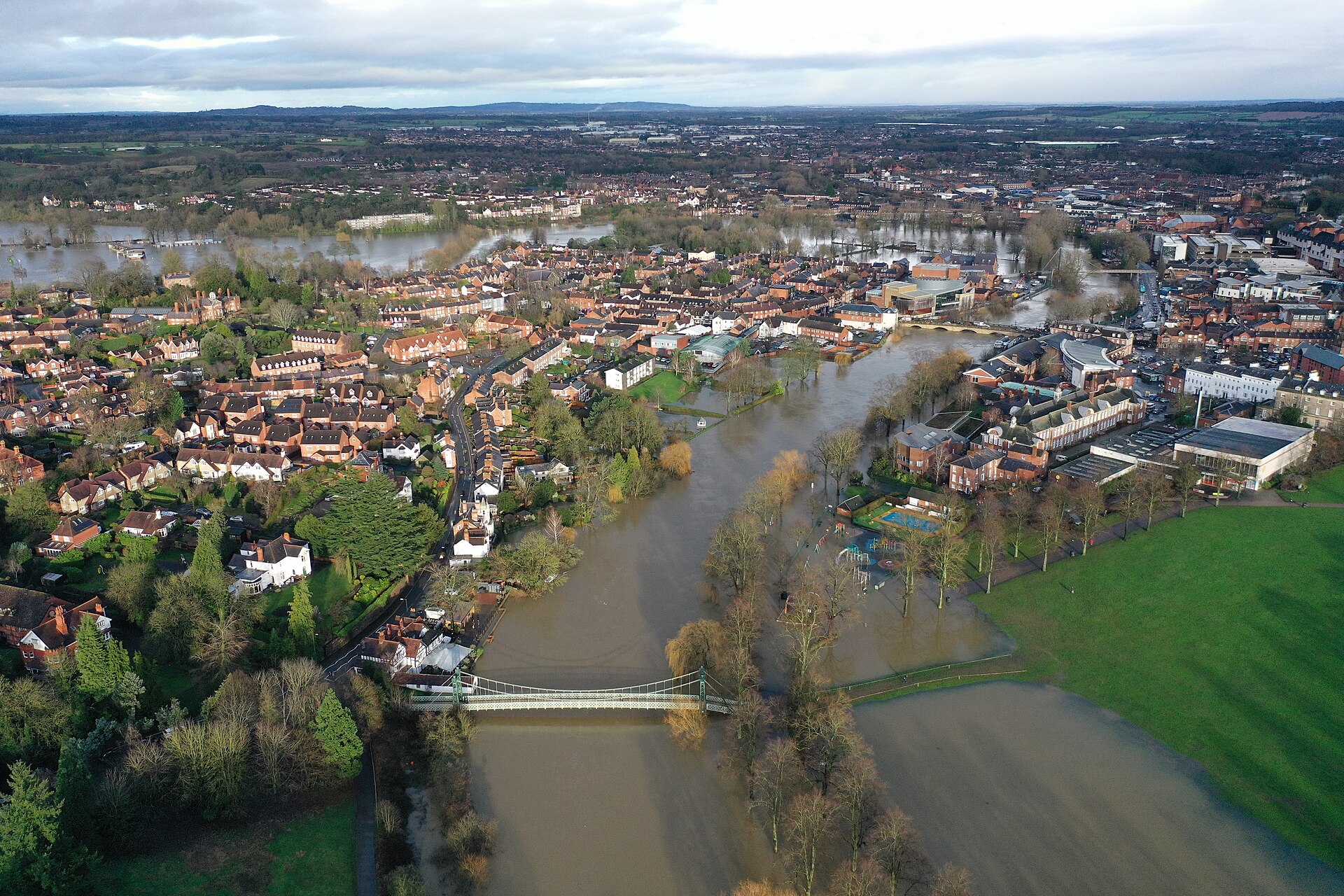
A river overflowing through a riverside town
What I will cover
The problem
Interconnected research directions
WP1: mapping how floods disrupt care
WP2 and WP3: measure it, then plan for it
Key Takeaways
Three connected packages, one thread
Each package feeds the next. WP1 defines what the models need to consider and measure, and the current vulnerability defines what the future planning adapts.
What I will cover
The problem
Interconnected research directions
WP1: mapping how floods disrupt care
WP2 and WP3: measure it, then plan for it
Key Takeaways
Disruption propagates, it does not stay put
Healthcare delivery is a system of interdependent parts. A flood is a shock that propagates through them.
A facility can stay completely dry and still stop delivering care. Monmouth proved it.
Two methods, one picture
WP1 combines computational reach with qualitative depth.
The text gives breadth and the what. The interviews give the why and the cascades. Together they triangulate.
Four contrasting cases, four flood mechanisms
Local authority boundaries: ONS Open Geography Portal.
The evidence base is gathered
First the academic literature: About 70 peer-reviewed studies from more than 20 countries
Then the text corpus: Documents from news, grey literature, humanitarian reports, council papers, government publications, and the Senedd records
Multiple filtering stages to keep documents relevant to the intersection of floods and healthcare service delivery, keep 84,877.
Recall-first strategy, because a lost document costs evidence; an extra read only costs compute.
The extraction framework
qwen2.5 32B, extract disruptions by reading every document with an engineered prompt, randomness off and a fixed seed, so a rerun gives exactly the same answer
Every extracted disruption must quote the exact sentence it came from to be verifiable
32,292 disruptions are returned, which will be organized into one giant disruption tree
Where we are
The problem
Interconnected research directions
WP1: mapping how floods disrupt care
WP2 and WP3: measure it, then plan for it
Key Takeaways
WP2: which facilities fail, and how demand shifts
A spatio-temporal model that scores healthcare facilities and tracks how floods change demand.
Inputs: flood hazard, road accessibility, facility characteristics, population context
A vulnerability score for each facility that varies across space and time
How demand moves during and after a flood, using interrupted time series
Causal machine learning to estimate effect sizes rather than mere correlation
WP3: planning resilience under uncertainty
How healthcare delivery stays functional as the climate shifts, and how scarce resources are planned for floods.
Scenario-based exposure of Welsh healthcare assets under RCP 4.5, RCP 8.5, 2 and 4 degrees of warming
Adaptation woven into routine investment, not separate adaptation investment
Optimization under uncertainty, since the future is uncertain by nature
Where we are
The problem
Interconnected research directions
WP1: mapping how floods disrupt care
WP2 and WP3: measure it, then plan for it
Key Takeaways
If you take three things away
WP1 is the foundation, and it is being carried out
The work is grounded in real Welsh cases, not in the literature alone, with interconnected research directions: evidence, cause, and the future
Built with a live network of Welsh partners, so the outputs are plans and tools health practitioners can actually use
Thank you 💬
Questions and discussion welcome.
Amirhossein Ghadiri
Data Lab for Social Good, Cardiff Business School
Supervised by Bahman Rostami-Tabar, Thomas Woolley, and William Bennett | Funded by WGSSS (ESRC)